
Understand more about your reproductive health with fertility testing
Our Services – Fertility Testing
Fertility tests are designed to help you learn more about your chances of conception. There can be several potential causes of infertility. Fertility naturally decreases with age in both men and women, but problems could also be related to anatomical, hormonal, genetic, and immune factors. Understanding more about what’s going on in your specific situation can help you know what treatment might be helpful.

Who is it for?
We recommend fertility treatment for:
- Those who are actively trying to have a baby but have been unable to conceive naturally.
- Those who are considering freezing eggs to provide options to start a family in the future.
- Those who want to empower themselves or learn more about their reproductive health.
Our Solutions
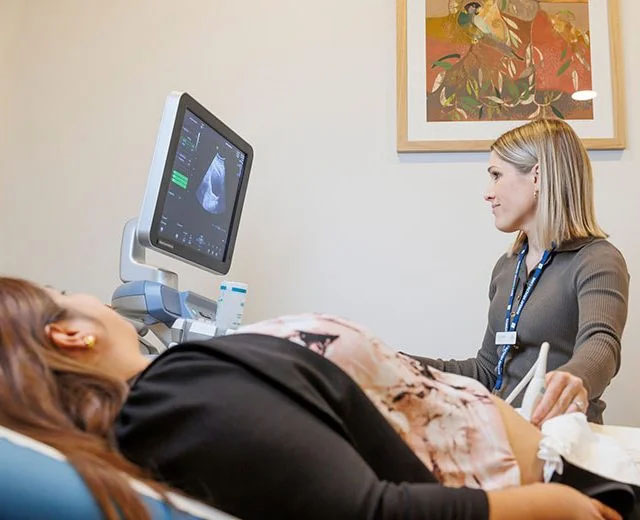
Female Fertility Test
Our fertility specialists use blood tests, ultrasound scans and sometimes minor surgical procedures to assess your reproductive health.
Female hormones (FSH, LH, oestrogen, progesterone) fluctuate during a woman’s cycle. Measured at specific times during your cycle, we can determine whether you are ovulating (releasing an egg from your ovaries) and how well your ovaries are functioning.
Additional hormonal tests (such as TSH, prolactin) are used to exclude endocrine conditions that can disrupt ovulation. AMH (anti-Mullerian hormone) is a marker of egg reserve (as women age, their egg count and AMH levels decline). It’s worth noting that AMH gives an indication of the quantity of eggs but does not predict egg quality.
We also use pelvic imaging studies to assess your reproductive tract (uterus, fallopian tubes, ovaries) to exclude conditions like endometriosis, PCOS or any anatomical factors that may prevent a successful pregnancy. Adding a tubal patency test can confirm that there is no blockage impeding the flow of sperm or eggs.
Surgical procedures (performed under anaesthesia) provide additional evaluation of the uterus and pelvis but are usually only required if there is a specific indication. With hysteroscopy, a camera is inserted into the uterus via the vagina to assess the inside of the uterus. Laparoscopy uses small incisions in the abdomen to look inside the pelvis. Both are minimally invasive procedures that can be diagnostic (looking for a condition) and therapeutic (removing the problem) at the same time.
Male Fertility Test
The male fertility assessment focuses on semen analysis. For a standard semen analysis, the volume of the semen is measured, the number of sperm counted, the motility (their ability to move efficiently) evaluated, and their morphology (size and shape) assessed. Additional tests include looking for the presence of sperm antibodies and DNA fragmentation. If the semen analysis reveals abnormalities that make natural pregnancy difficult, a second semen analysis is performed to rule out a temporary interruption to sperm production. If the semen analysis results repeatedly fall outside the normal range, your specialist may suggest additional blood tests, such as hormones (testosterone, FSH, LH, Prolactin) and genetic tests, as well as an ultrasound of the scrotum. Once we have a good overview of your reproductive health, our fertility specialist will be able to discuss options for increasing the likelihood of conception.